

When we talk about the future of electrification in Canada—especially in the Prairies, Northern Ontario, and the Arctic—the conversation always circles back to one challenge: extreme cold. Lithium‑ion batteries lose range, charging slows to a crawl, and heavy‑duty commercial vehicles struggle to operate reliably.
But a new real‑world test from China just delivered a breakthrough that could reshape cold‑climate electrification worldwide.
A Heavy-Duty EV Truck Survives –40°C Winter Testing
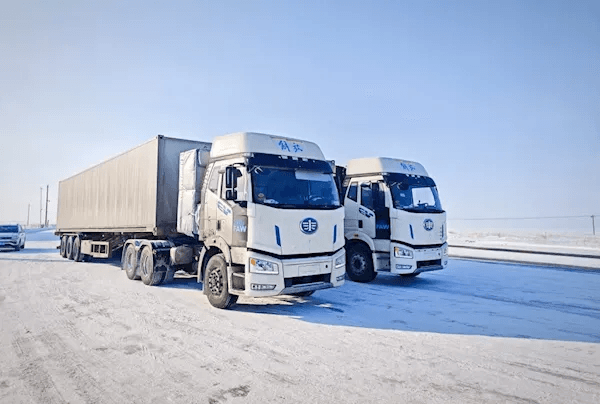
FAW Jiefang, one of China’s major commercial vehicle manufacturers, partnered with Zhongke Haina to conduct a full‑cycle, seven‑month test of a sodium‑ion battery–powered heavy‑duty electric truck. The results were striking:
- The truck maintained over 90% usable battery capacity at –40°C
- Total road‑testing mileage exceeded 15,000 km
- The vehicle used a 339 kWh sodium‑ion battery pack
For context, lithium‑ion heavy trucks typically suffer severe range loss in deep winter—sometimes dropping to 40–60% of rated capacity. Maintaining above 90% at –40°C is not just incremental progress; it’s a category‑shifting leap.
Canada’s electrification goals depend heavily on solving cold‑weather performance issues. Sodium‑ion batteries offer several advantages that align with Canadian needs:
1. Cold-Climate Reliability
The test shows sodium‑ion chemistry is far more stable in extreme cold, addressing one of the biggest barriers to EV adoption in northern regions.
2. Faster Charging
The truck achieved full charging in just 20–25 minutes —a major improvement for commercial fleets that operate on tight schedules.
3. Long Cycle Life
The battery demonstrated over 8,000 fast‑charge cycles without significant degradation , which is crucial for high‑utilization vehicles like freight trucks, municipal fleets, and buses.
4. Safer Chemistry
Sodium‑ion materials are more thermally stable and less prone to runaway reactions compared to lithium‑ion . This is especially important for heavy‑duty vehicles carrying large packs.
5. Abundant Raw Materials
Sodium is far more abundant and globally distributed than lithium, reducing supply‑chain risk and cost volatility—an advantage for Canadian manufacturers and fleet operators.
A Potential Turning Point for Heavy-Duty EVs
The test vehicle—FAW Jiefang’s J6P pure electric tractor—underwent a full suite of evaluations, including reliability, power performance, and extreme‑temperature testing . The results suggest sodium‑ion batteries are ready to move from lab prototypes into real commercial deployment.
For Canada, this could mean:
- More reliable winter performance for long‑haul trucking
- Lower‑cost electrification options for mining, forestry, and construction fleets
- New opportunities for domestic battery manufacturing
- Reduced dependence on lithium supply chains
What Comes Next?
Sodium‑ion batteries won’t replace lithium‑ion everywhere. But for cold climates, heavy‑duty applications, and cost‑sensitive markets, they may become the preferred solution.
This breakthrough test shows that the technology is no longer theoretical—it’s operational, validated, and ready for scaling.
Canada, with its vast geography and harsh winters, stands to benefit more than almost any other country.
